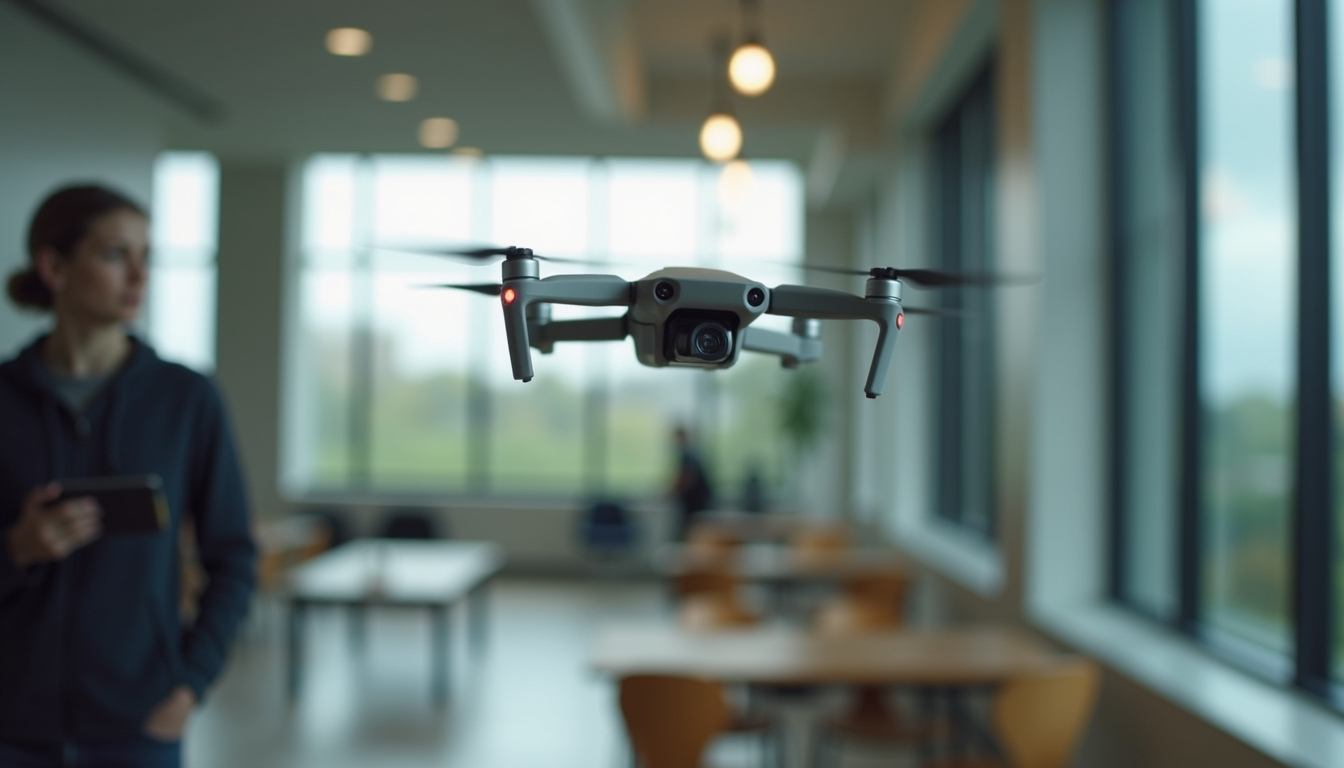
Exploring Drone Programming — Heng Fa Chuen Youth Space
Drones have become an indispensable tool in modern technology, ranging from entertainment to professional applications and even driving economic development. For students in Hong Kong, learning drone programming not only sparks their interest in technology but also cultivates logic thinking and problem-solving skills. We collaborated with the Youth Space in Heng Fa Chuen to hold a four-session drone programming course throughout November, guiding students step-by-step from manual control to programming, allowing them to master drone control techniques and programming fundamentals.
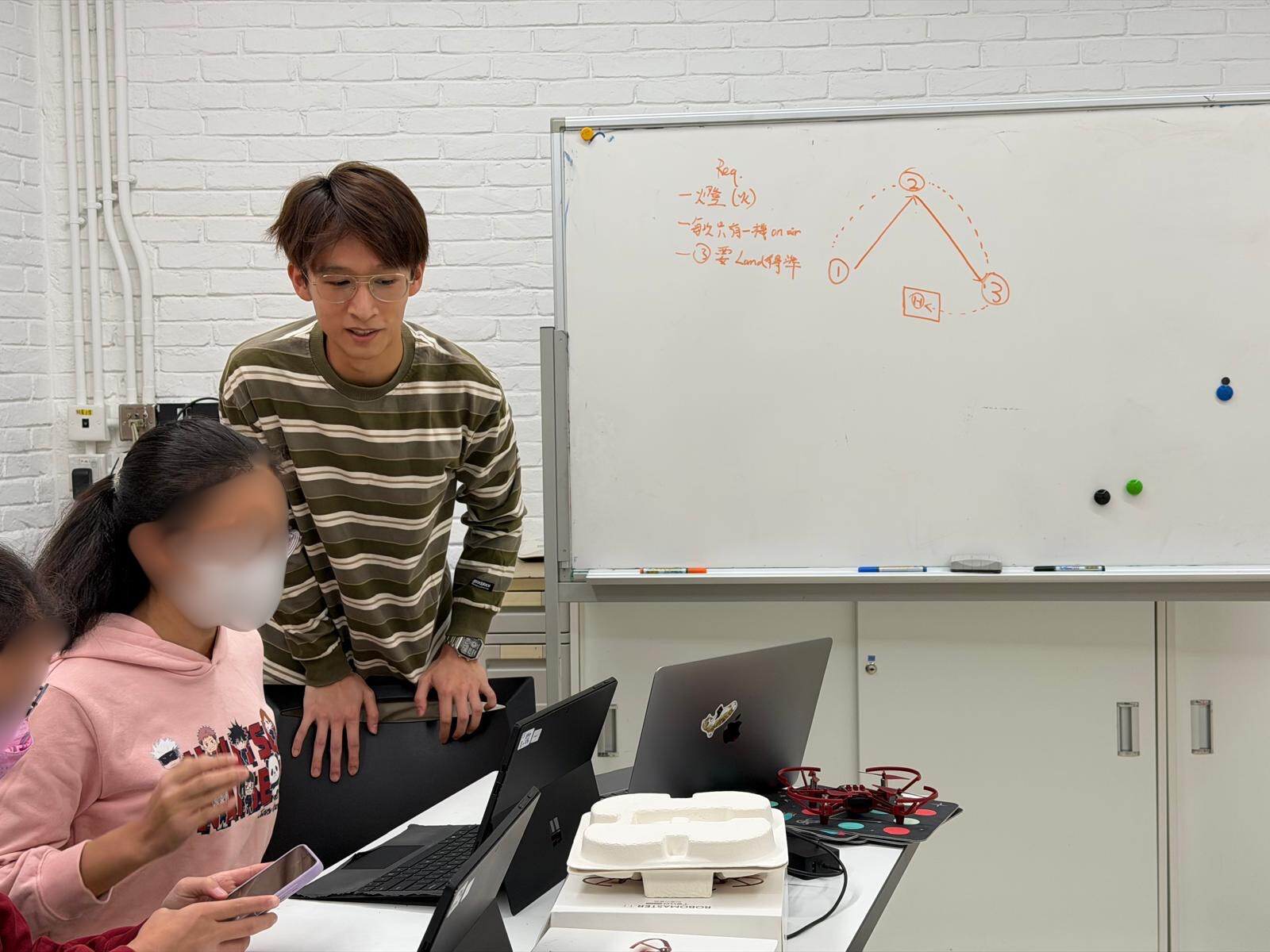
Lesson 1: Starting with Manual Control to Experience the Charm of Drone Flight
The focus of the first lesson is to let students operate the drones themselves, enabling them to experience the basic actions of flying through manual control. This phase allows students to become familiar with the basic operations of drone takeoff, landing, moving forward, moving backward, and turning left and right. Such experiences help students build an intuitive understanding of drones and comprehend the physical sensations and reaction times involved in flying.
Teachers will arrange simple flight missions, such as getting the drone to complete a fixed-route flight within the classroom or to fly around obstacles. These missions not only enhance students' control skills but also foster their concentration and spatial awareness.
Lesson 2: Combining Movement Blocks to Complete Complex Flight Missions
After becoming familiar with basic drone controls, students enter the world of programming. The course introduces graphical programming languages, using a block-based programming interface that allows students to easily comprehend programming logic.
In the second lesson, students start learning to use movement block instructions such as moving forward, moving backward, ascending, descending, and rotating. These blocks allow students to control the drone’s flight path more precisely.
We have designed a series of programming missions, such as:
- Getting the drone to fly along a specified path to complete a simple aerial maze.
- Hovering in a designated area and taking photos.
- Using rotation and movement blocks to make the drone create different geometric patterns.
These tasks not only test students' programming abilities but also enhance their spatial planning and logical thinking. Students need to consider how to combine different blocks to enable the drone to successfully complete the missions.
Lesson 3: Understanding the Basics of Programming, Using Logic Blocks to Control Drones
The focus of this lesson is on learning logic blocks, such as "If else" conditional statements and "Forever" loops. The teacher will design simple tasks, such as:
- If the drone detects an obstacle ahead, it will stop and turn.
- Using task challenge cards (Mission Pad) to make the drone respond with corresponding flight actions upon sensing different numbered task challenge cards.
- Having the drone hover continuously until receiving a stop command.
These tasks enable students to understand how programming can control the behavior of drones and learn to react based on different conditions. Through practical operation, students can see the direct correlation between the code and the drone's actions, enhancing their learning motivation.
Lesson 4: Integrative Application, Challenging Autonomous Flight Missions
The final lesson consolidates the knowledge learned in previous classes, allowing students to tackle more challenging autonomous flight missions. Students need to design a complete program that enables the drone to accomplish multiple tasks within a limited time, such as:
- Flying over multiple obstacle points.
- Landing accurately in a designated area.
- Using sensor data to control the drone’s "relay" takeoff.
This lesson emphasizes students' creativity and problem-solving abilities. The teacher encourages students to experiment with different programming combinations and observe the drone's responses during flight, making adjustments and optimizations.
The Multiple Gains from the Course for Students
These four lessons not only equip students with fundamental drone control and programming skills but also cultivate the following abilities:
- Logical Thinking: Through programming, students learn to analyze problems and design solutions.
- Practical Skills: Operating drones firsthand enhances hand-eye coordination and operational skills.
- Creativity: Designing autonomous flight missions stimulates students' innovative thinking.
- Teamwork: The class often includes group collaboration tasks, fostering communication and cooperation skills.
This kind of course also lays a solid foundation for students' future learning in STEM fields, making them more competitive in a rapidly developing technological era. If you are interested in our courses, please refer to our website information or make inquiries. We can adjust the courses to meet various needs and usage scenarios. We look forward to collaborating with you to create a new chapter in STEM education together!